
 Audio will be here:
When did death first invade your life?
When I was ten and in the fifth grade at Pinchbeck Elementary, our teacher Miss Gill used to read to us after the chaos that was lunch to calm us down and re-center our attention for afternoon lessons. One of the books she chose to read to us was the Katherine Paterson novel Bridge to Terabithia.
The novel is set in rural Virginia and tells the story of Jess Aarons, a fifth-grade boy with four sisters who trains all summer with the goal of becoming the class’ fastest runner, only to be surpassed by Leslie Burke, the new girl who has just moved to town. Jess and Leslie soon become dear friends, spending their free time swinging on a rope across a local creek to an imaginary kingdom where they reign as king and queen called Terabithia. One morning, Jess leaves town on a trip to the Smithsonian with the school’s art teacher, Miss Edmunds without first telling Leslie and only telling his mother while she was half-asleep and unaware of what he was saying.
We had just returned from the cafeteria to the classroom like every other day. We took our seats and Miss Gill sat atop a stool center-left of the dark green chalkboard at the front of the class and opened the book to read chapter ten of Terabithia to us, a chapter titled “The Perfect Day.” In it, Jess returns from a joyous day studying art at the Smithsonian, and he is dropped off at the end of the road by Miss Edmunds.
Miss Gill continued reading:

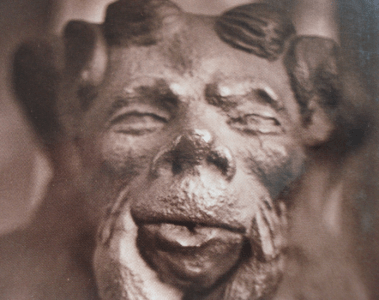 The Screwtape Letters is a Christian apologetics novel written by C. S. Lewis, and first published in book form in 1942. The story takes the form of a series of letters from a senior demon, Screwtape, to his nephew, a junior tempter named Wormwood, so as to advise him on methods of securing the damnation of a British man, known only as “the Patient.” The body of the letters that comprise the book has Screwtape giving Wormwood detailed advice on various methods of undermining faith and promoting sin in his Patient, interspersed with observations on human nature and Christian doctrine, and in doing so, the book provides a series of lessons in the importance of taking a deliberate role in living out Christian faith.
 Going on to Imperfection